
The digital gambling industry continues to evolve as new technologies reshape how players access and fund their favorite casino games. One of the most notable developments in recent years is the growing use of cryptocurrency on online casino platforms, particularly within live dealer environments. Among these games, live baccarat tables have emerged as a popular choice for players who want a sophisticated, real-time casino experience combined with the convenience of digital transactions.
As cryptocurrencies such as Bitcoin and other blockchain-based assets become more widely accepted, many online casinos are integrating them as payment methods for live online casino games. This development highlights new opportunities and potential risks for players and platforms alike.
The Rise of Live Baccarat in Online Casinos
Baccarat has long been associated with high-stakes casino floors and elegant gaming environments. Traditionally played in physical casinos, the game has transitioned successfully into online formats through live dealer technology. Live baccarat tables stream real dealers and physical cards in real time, allowing players to watch each hand unfold while placing bets through a digital interface.
This format provides a sense of authenticity that standard digital casino games often lack. Players can observe the dealer, watch the cards being dealt, and experience the pacing of a traditional baccarat table. Because of this realism, live baccarat has become a cornerstone of many modern online casino platforms.
With the availability of cryptocurrency payments to these live environments, it represents the next phase in the game’s digital transformation.
Why Crypto Payments appeal to Online Players?
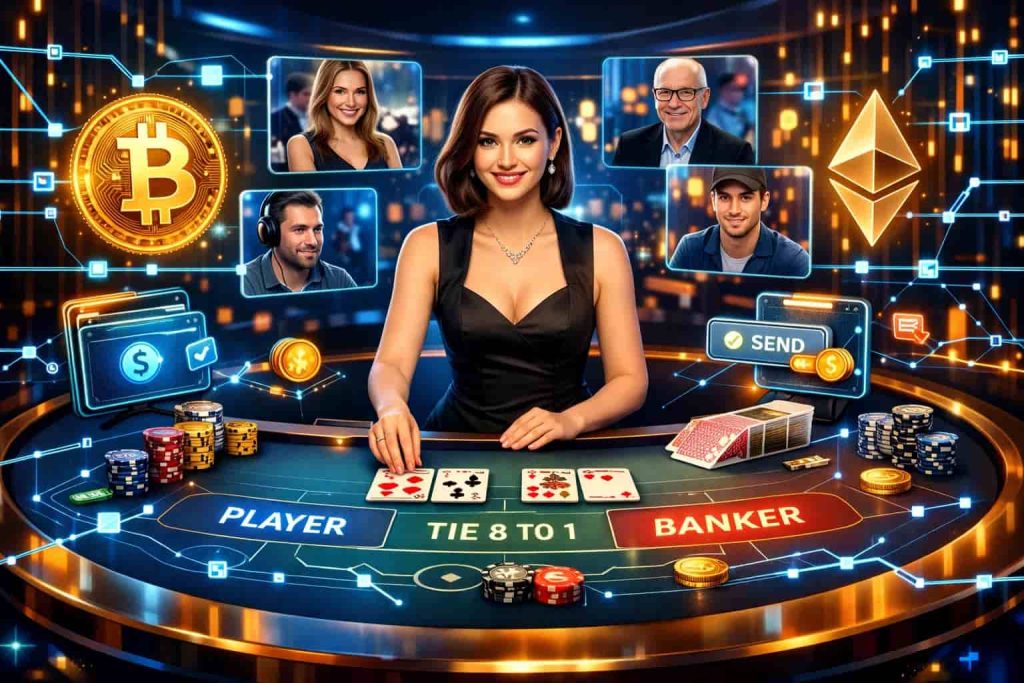
Cryptocurrency has gained traction within the online gambling industry largely due to its speed and accessibility. Traditional banking systems often involve delays, transaction fees, and restrictions when transferring funds to online casinos. In contrast, blockchain-based payments can be processed quickly and across borders without relying on conventional financial intermediaries.
For players participating in live baccarat games, this can mean faster deposits and withdrawals. Many crypto transactions settle within minutes rather than days, which improves liquidity and convenience for frequent bettors. Another appeal is privacy. Cryptocurrency wallets typically require less personal financial information compared to traditional payment methods.
How Crypto Integration is Changing the Gambling Landscape?
The combination of live dealer games and cryptocurrency payments illustrates how quickly the online gambling ecosystem is evolving. Live baccarat already provides an immersive experience that mirrors the atmosphere of a physical casino, and crypto integration adds a new dimension of financial flexibility.
From the perspective of online casino operators, accepting cryptocurrency can expand their global reach. Players from different regions can access casino game selection without relying on local banking infrastructure, potentially increasing international participation.
At the same time, the industry must balance innovation with responsible practices. Regulatory compliance, transparency, and player protection remain essential as platforms experiment with new payment technologies.
The Future of Live Baccarat and Digital Finance
As cryptocurrency adoption continues to grow worldwide, its presence in online gambling platforms is likely to expand as well. Live baccarat tables offer a compelling environment for this integration because the game already attracts players who value fast-paced betting, real-time interaction, and high-value transactions.
Whether crypto ultimately becomes a dominant payment method in online casinos will depend on several factors, including regulatory developments, technological security improvements, and broader financial acceptance of digital assets. For now, the connection between live baccarat and cryptocurrency represents a fascinating example of how traditional casino games are adapting to the digital economy.