
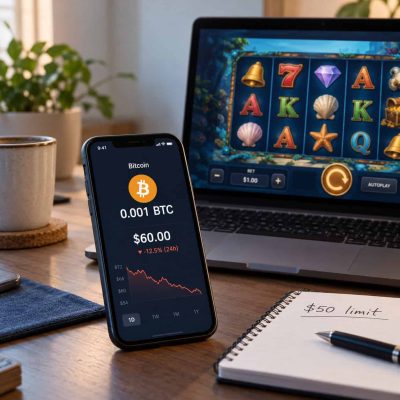
 Cryptocurrency adds an extra variable to an online slots budget. Besides tracking deposits, wagers, and withdrawals, players must consider what their digital coins are worth in everyday money. A balance can gain or lose value because of market movements, even before a single spin.
Understanding this difference helps you set clearer spending limits. Before proceeding with an MZPlay download, treat cryptocurrency as real money and keep your gambling budget within funds you can afford to lose without affecting bills, savings, or other responsibilities.
Your Coin Balance and Cash Value Are Different
Holding the same amount of cryptocurrency does not guarantee the same purchasing power. Bitcoin and other crypto assets can swing substantially in price. As a result, a gambling allowance measured only in coins may represent a changing amount in your local currency.
Consider a hypothetical wallet holding 0.001 bitcoin. If bitcoin costs $60,000, that balance is worth $60. If its price falls to $48,000, the same balance becomes worth $48. If the price rises to $72,000, it becomes worth $72.
These changes occur independently of slot results. Recording both the coin amount and its cash equivalent gives you a clearer picture of how much money is available and at risk.
How Platforms Handle Deposits Matters
Before depositing, check whether the platform keeps your balance in cryptocurrency or converts it into a conventional currency.
If your deposit is converted into dollars when credited, later bitcoin price movements generally will not change that dollar balance. However, exchange rates, conversion charges, and transaction timing can affect the amount credited.
If the balance remains denominated in bitcoin, its cash value continues moving with bitcoin’s price. The number displayed in your account might stay unchanged while its purchasing power changes.
Also check how withdrawals work. A dollar balance paid out in cryptocurrency may purchase different quantities of coins depending on the conversion rate used. Understanding these rules prevents confusion when comparing deposited and withdrawn amounts.
Price Increases Can Raise Your Wager Costs
A rising cryptocurrency price can make fixed coin wagers more expensive in cash terms. For example, a wager of 0.00001 bitcoin costs $0.60 when bitcoin trades at $60,000. At $72,000, the same wager costs $0.72. Across 100 spins, total stakes would rise from $60 to $72, assuming no changes in price or wager size during play.
Total stakes are not the same as net losses because payouts may occur. Nevertheless, the example shows why an unchanged coin wager can increase spending exposure. Review the cash equivalent before playing. A higher wallet value doesn’t require a higher entertainment allowance, especially when the gain may disappear with another market move.
Price Falls Can Shrink Your Available Budget
When cryptocurrency prices fall, the cash value of funds held in that cryptocurrency falls too. A wallet previously worth $100 might become worth $80 after a 20% decline.
Adding another $20 to restore the original value would be a new contribution from your finances. It shouldn’t happen automatically just because the market moved.
A smaller balance may justify reducing your planned spending or skipping a session. Trying to recover a market loss through slots combines two separate risks and can lead to spending beyond your original limit.
Slot outcomes do not improve because cryptocurrency has fallen in value. Market timing cannot turn gambling into a reliable way to rebuild savings.
Fees Reduce the Money Available for Entertainment
Cryptocurrency transactions can involve network fees, exchange charges, conversion spreads, and platform withdrawal fees. The applicable costs depend on the asset, network, payment provider, and platform.
Suppose your total entertainment allowance is $50. If buying and transferring cryptocurrency costs $5, only $45 remains within that allowance for play. Spending the full $50 on wagers would push your overall outlay to $55.
Look at the final amount received, not just the advertised exchange rate. Minimum withdrawals can also leave small balances temporarily inaccessible. Keep a separate record of fees so you can distinguish gambling results from payment costs and cryptocurrency value changes.
Stablecoins may reduce some price fluctuations because they aim to track a reference currency, but that does not make them risk-free. They can lose their peg, and conversion costs still apply. If your household budget uses a different currency, exchange-rate movements can also affect its local value. Always check the actual amount available after conversion before treating any displayed token balance as a fixed spending allowance.
Set Limits in Your Everyday Currency
A budget expressed in your everyday currency connects gambling spending to your actual household finances. Choose a maximum amount for a defined period, then include deposits and payment costs within it.
Use deposit limits and time reminders where available. Avoid topping up after losses or raising the allowance because a wallet suddenly looks more valuable.
For withdrawals, record the coin quantity and cash equivalent when you receive it. Later price changes are separate from the gambling session’s outcome.
Consistent records make spending easier to understand. The goal is to keep entertainment affordable despite changing prices, rather than depend on cryptocurrency gains or slot payouts to support your budget.